
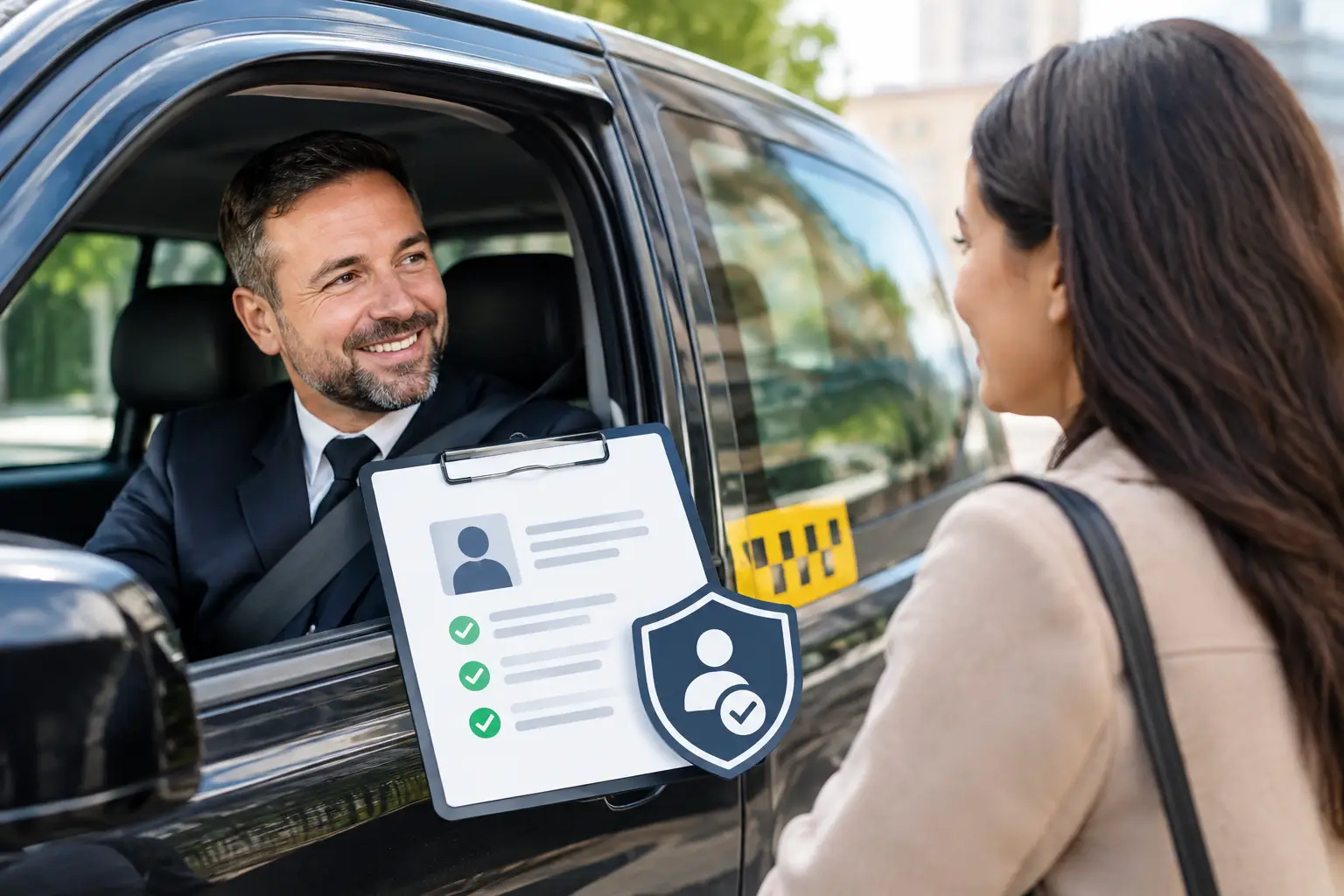
A taxi journey often starts with a simple practical need: getting to Bodmin Parkway for an early train, collecting family from Newquay Airport, or arriving at an appointment on time. Yet passengers are also placing their safety in the hands of a driver they may not have met before. That is why driver background checks matter. They are one part of the professional standards that should sit behind every properly run taxi and private hire service.
For passengers, the aim is not to understand every administrative detail. It is to know that the driver and vehicle arriving for the journey have been properly assessed, licensed and monitored by the relevant authorities. For operators, those checks are a serious responsibility, particularly when transporting children, older passengers, visitors and people travelling alone.
What driver background checks involve
In the taxi and private hire trade, a background check is not simply one form or one certificate. It is a combination of checks designed to help licensing authorities decide whether someone is suitable to carry passengers professionally.
The exact process is set by the local licensing authority, so requirements can vary between areas. However, a properly licensed driver will generally be assessed on matters including criminal record history, driving entitlement, identity and right to work in the UK. Licensing authorities may also consider medical fitness, safeguarding knowledge and any history that could affect a driver’s suitability.
The best-known check is the enhanced Disclosure and Barring Service check, usually called an enhanced DBS check. This provides relevant criminal-record information and may include checks against barred lists where appropriate. It helps the licensing authority make an informed decision, rather than relying only on a driver’s own declaration.
A DBS certificate is not a lifetime guarantee of suitability. Circumstances can change after a licence is granted. For that reason, many licensing arrangements require drivers to keep their DBS status current through the DBS Update Service or to complete repeat checks at set intervals. This continuing oversight is as valuable as the initial application check.
DBS checks are important, but they are not the whole picture
Passengers sometimes hear the phrase “DBS-checked driver” and understandably see it as a key sign of reassurance. It is a meaningful standard, but it should be viewed alongside the wider licensing process.
A driver must hold the correct taxi or private hire driver licence issued by the appropriate council. The authority will normally check that the person has a valid DVLA driving licence and may review motoring convictions or endorsements. This is different from checking whether a vehicle is roadworthy, but both are essential to safe passenger transport.
Medical standards also matter. Professional driving can involve long shifts, changing road conditions and responsibility for passengers who may need extra support. Licensing authorities commonly require medical evidence at application stage and may ask for further assessments as drivers get older or where a medical condition needs review.
There is also a practical behavioural element. Licensed drivers are expected to understand safeguarding responsibilities, appropriate conduct and what to do if they are concerned about a vulnerable passenger. A certificate alone cannot create good judgement. Training, clear operating procedures and a culture of professionalism are what turn formal checks into safer journeys.
Why safeguarding matters for every passenger
Safeguarding is sometimes discussed only in relation to children, but its purpose is wider. Anyone can be vulnerable at a particular time: a passenger who is unwell, unfamiliar with the area, using a wheelchair, travelling late at night or affected by alcohol may need a driver who acts responsibly and knows the right boundaries.
A professional driver should treat passengers with respect, follow the agreed journey, and communicate clearly if a route or collection point needs to change. They should not put pressure on a passenger, make them feel uncomfortable or take advantage of a situation where help is needed.
For families arranging transport for a teenager, or an organisation booking regular journeys for clients, the value of a properly licensed and vetted operator is especially clear. Booking through an established company creates an identifiable record of the journey, the vehicle and the driver allocated. That is very different from accepting an unbooked ride from an unknown person.
The difference between taxis and private hire vehicles
It is useful to understand the distinction when making a booking. A hackney carriage taxi can usually be hailed from the street or picked up from a rank, subject to local rules. A private hire vehicle must be pre-booked through a licensed operator. Neither type should be confused with an unlicensed vehicle offering lifts for payment.
Private hire bookings provide useful accountability. The operator records the booking details and dispatches an authorised driver and vehicle. Before getting in, passengers should check that the car matches the booking information and, where applicable, that the driver displays the required licence badge or identification.
If anything does not look right, do not feel obliged to travel. Contact the operator using the number you already know, rather than relying on someone approaching you, and ask them to confirm the vehicle details. This is particularly sensible at busy transport points, late at night and during major local events.
Questions worth asking before you book
Most passengers do not need to request copies of DBS certificates or licensing paperwork. Those documents contain personal information and are handled by the licensing authority and operator. But there are sensible questions you can ask when choosing a transport provider.
Ask whether the company uses licensed, DBS-checked drivers and whether it can provide the type of vehicle you need. If you are travelling with a larger group, require wheelchair-accessible transport or need a child seat arrangement discussed in advance, make this clear at the time of booking. The right vehicle and driver allocation are part of a safe service, not an afterthought.
For an airport or station transfer, give your travel details and allow enough time for the journey. A reputable operator will explain collection arrangements, especially where delays are possible. For regular business or care-related travel, an account arrangement can also provide consistent booking records and clearer communication.
What good operators do beyond the initial checks
Background checks should be the starting point, not the finish line. Responsible operators keep accurate driver and vehicle records, respond promptly to concerns and work with licensing authorities when required. They also make it straightforward for passengers to contact the office if a booking needs to be changed or if feedback needs to be raised.
Vehicle standards matter just as much. A suitable vehicle should be licensed where required, maintained properly, clean and appropriate for the passengers travelling. An eight-seat minibus may be the practical choice for a family group, while a wheelchair-accessible vehicle needs to be booked specifically so that the right equipment and space are available.
Local knowledge is another quiet safety benefit. A driver familiar with Cornwall’s roads, railway connections and airport collection arrangements can make better decisions when traffic, weather or roadworks affect the route. Reliability is not just arriving at the right time. It is having the experience and systems to deal calmly with the unexpected.
A shared responsibility for safer journeys
Passengers can support safe travel by booking with a licensed operator, providing accurate collection details and checking the vehicle before they get in. Drivers and operators carry the greater responsibility: maintaining licences, completing required checks, keeping standards high and treating every passenger properly.
At Parnells Taxis, professional licensed and DBS-checked drivers are part of the service customers should expect when arranging local travel, long-distance transfers or accessible transport. Whether the journey is routine or important, booking in advance with a known provider gives you clarity about who is collecting you and how to get help if plans change.
When your next journey matters, choose a properly booked, licensed service and share any travel requirements before the car is dispatched. It is a simple step that helps make the whole journey more comfortable, accountable and reassuring.
Leave a Reply