
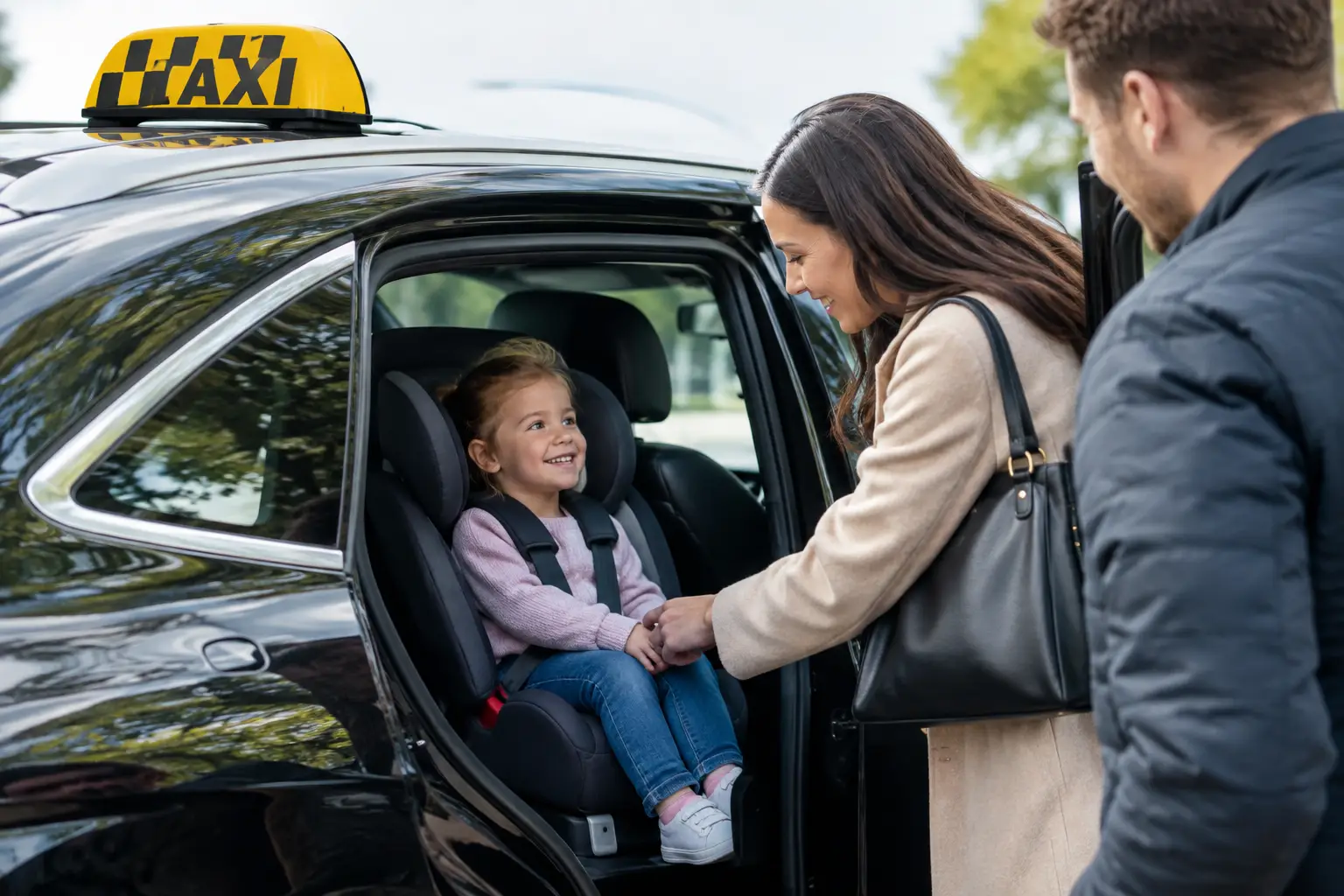
A 6am airport pickup, a sleeping toddler and a pushchair can make a simple taxi journey feel like a logistical exercise. So, do taxis offer child seats? Some do when requested in advance, but it is not a standard feature in every vehicle and availability should never be assumed.
For families travelling in Cornwall, the practical answer is to plan the child seat before booking the car. Whether you are heading to Bodmin Parkway, Newquay Airport or visiting family, confirming the child’s age, height and seat requirement gives the operator the best chance of providing a suitable vehicle.
Do taxis offer child seats as standard?
No. There is no general requirement for every taxi or private hire vehicle to carry a child seat, booster seat or infant carrier. A vehicle may have rear seat belts, but that does not mean it will have a restraint suitable for a baby or young child.
Some operators can provide child seats for pre-booked journeys, subject to availability. Others may ask parents or carers to bring their own. This is particularly common for airport transfers, where families may prefer the familiar fit and condition of their own seat.
It also depends on the vehicle. A larger car or minibus may be the right choice for a family with several children, luggage and a buggy, but the number of child seats that can be fitted safely can still be limited by the seat belt arrangement and available space. Tell the booking team exactly how many adults, children, child seats and bags are travelling rather than simply requesting a larger vehicle.
What are the UK rules for children in taxis?
UK child car seat rules include specific exemptions for licensed taxis and private hire vehicles. They are designed for situations where a suitable child restraint is not available, not as a preferred everyday arrangement.
As a general rule, children should use an appropriate child restraint until they are either 12 years old or 135cm tall, whichever comes first. Once they are over that age or height, they must wear an adult seat belt.
In a licensed taxi or private hire vehicle, a child under three may travel without a child seat only in the rear of the vehicle if an appropriate restraint is unavailable. They must not travel in the front seat without the correct child seat.
A child aged three or over and under 135cm may use a rear adult seat belt when a suitable child restraint is unavailable in a taxi or private hire vehicle. This exemption can be useful for an unexpected journey, but it is not equivalent to using a correctly fitted seat designed for the child’s size.
The safest option remains straightforward: use the right child seat whenever possible. For a planned journey, especially one involving faster roads or a longer airport transfer, bringing your own seat or arranging one in advance is usually the best approach.
Why the exemption should not become the plan
An adult seat belt is designed for an adult body. On a smaller child, the belt may sit too high across the neck or abdomen instead of over the shoulder and hips. A suitable child seat or booster helps position the belt correctly and gives the child better protection.
The legal exemption recognises that a taxi may be needed at short notice. It does not mean that a child seat is unnecessary for a pre-arranged trip. Parents and carers remain best placed to decide what their child needs for a comfortable and safe journey.
How to book a taxi with a child seat
Book as early as you can, particularly during school holidays, weekends and busy airport periods. Make the request at the point of booking, rather than mentioning it to the driver when the vehicle arrives.
Give clear information about the child. Their age is useful, but their approximate height and weight are often more helpful when identifying whether an infant carrier, rear-facing seat, forward-facing seat or booster may be appropriate. If you are bringing your own seat, say so as well.
It is worth confirming a few practical details before travel:
- whether a child seat can be supplied and what type it is;
- whether it will be fitted when the vehicle arrives or whether you will fit it yourself;
- whether the vehicle has enough room for the seat, pushchair and luggage; and
- whether you need the seat for both outward and return journeys.
Do not assume a seat can be left in the vehicle while you are away. For example, a child seat used for a transfer to Newquay Airport may not be able to remain with the driver until your return. If you need one at both ends of the holiday, ask about the return arrangement before you book.
Bringing your own child seat
Many families choose to bring their own child seat because they know its history, instructions and fit. This can be the most reliable option for babies and younger children, or where a child needs a particular style of restraint.
Check that the seat can be installed with a standard three-point seat belt. Not all taxi vehicles have ISOFIX points available for passenger use, and a seat that relies solely on ISOFIX may not be suitable for every journey. If the seat needs a top tether, support leg or has a specific fitting requirement, tell the operator before booking.
Allow a few extra minutes at collection. Fitting a child seat carefully should not be rushed on the roadside, outside a station or at an airport drop-off area. If possible, fit it on the pavement-side rear seat away from passing traffic.
For children travelling in a rear-facing seat, the rear is normally the best place. Never place a rear-facing child seat in front of an active passenger airbag. If a front-seat position is unavoidable, the airbag must be deactivated and the seating position checked against the child seat manufacturer’s instructions. In most cases, booking a vehicle with adequate rear-seat space is the simpler and safer choice.
Planning airport and station transfers with children
Longer journeys need a little more thought than a short trip into town. A family travelling with car seats, cases, hand luggage and a buggy may need a larger vehicle even when there are only three or four passengers. Booking the smallest car that technically fits the passengers can leave no safe room for luggage or a properly fitted child seat.
For a station collection, consider where the children will wait while bags are loaded and seats are fitted. For an airport journey, factor in the time needed to unload, organise the buggy and reach the terminal. A professional driver can help make the collection orderly, but they need accurate information in advance to send the right vehicle.
If you are travelling as a group, do not rely on children sitting on an adult’s lap to save space. Every passenger needs a seat, and children need appropriate restraints wherever possible. The right vehicle size protects both comfort and safety.
Questions worth asking before you travel
The most useful question is not simply, “Do taxis offer child seats?” Ask whether a suitable seat is available for your child and whether it can be securely fitted in the vehicle assigned to your booking.
Also ask whether there will be a charge, whether the seat meets current safety standards and whether the same arrangement can be provided for a return journey. If a child has additional needs, such as needing extra space, a specialist harness or wheelchair-accessible travel, raise this while booking rather than on the day.
Parnells Taxis welcomes advance information about family travel requirements so that the booking can be matched to a suitable vehicle wherever possible. Use the Book Now service or speak to the team before travel, particularly when a child seat, pushchair, extra luggage or a larger vehicle is required.
A child seat request is a small detail that can make a major difference to a journey. Confirm it early, bring your own seat when that is the best fit for your child, and give yourself a few unhurried minutes at collection so everyone can set off safely.
Leave a Reply